

The India-made Suzuki Baleno has received a 2-star safety rating in the latest Latin NCAP crash tests, with results released in December 2025. The rating applies to the Baleno variant manufactured in India and exported to Latin American markets, and it does not represent the car’s safety standing in India under Bharat NCAP norms.
How the Baleno performed in crash tests
According to Latin NCAP’s detailed report, the Baleno scored 79% for Adult Occupant Protection and 65% for Child Occupant Protection. Pedestrian Protection stood at 48%, while the Safety Assist score came in at 58%.
The crash-tested vehicle was rated with a stable bodyshell, meaning the structure was considered capable of handling further loadings in severe impacts.
Read More :- Year-End Offers: Maruti Suzuki Cars Get Discounts of Up to ₹2.19 Lakh in December
Adult occupant safety: Strong head and neck protection

In the frontal offset and side impact tests, protection for the head and neck of adult occupants was rated good. Chest protection was largely assessed as adequate. However, knee protection was marked as marginal, mainly due to the risk of contact with hard structures behind the dashboard.
The side pole impact test showed good protection for the head and pelvis, while rear impact whiplash protection for front-seat occupants was also rated good.
Child safety shows promise, but with limitations

For child occupants, Latin NCAP highlighted strong crash performance with rearward-facing child seats installed using ISOFIX anchorages. These seats offered full to near-full protection in both frontal and side impacts.
That said, the overall child occupant score was affected by limitations in child seat installation across all seating positions, which reduced flexibility for families using different seating layouts.
Why the Baleno missed a higher rating
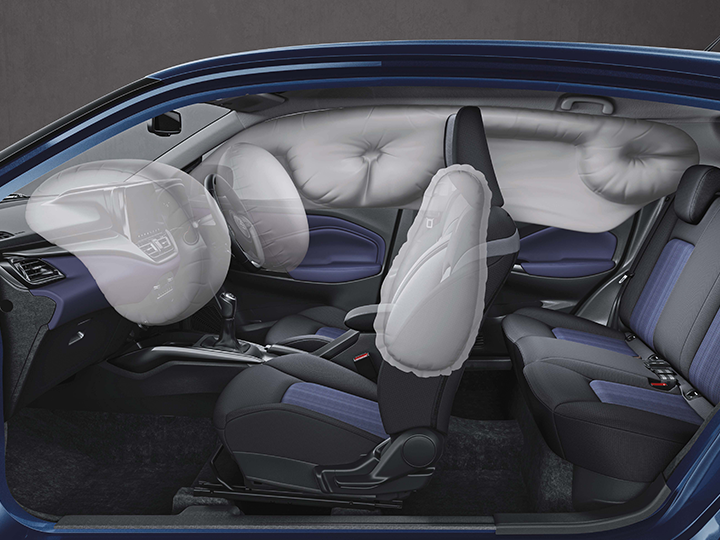
Despite being equipped with six airbags, ESC as standard, seatbelt reminders for all seats, and ISOFIX mounts, the Baleno’s overall rating was capped at two stars due to the absence of advanced driver assistance systems (ADAS).
Read More :- Mahindra XUV 7XO New Teaser Confirms Triple-Screen Setup, Boss Mode Ahead of January 5 Launch
Key features like Autonomous Emergency Braking (AEB), lane assist, speed assistance, and blind-spot detection are not offered on the Latin NCAP-tested version. Under the current Latin NCAP protocol, the lack of these active safety technologies significantly pulls down the Safety Assist score.
The bigger picture

The results underline a clear global trend: ADAS features now play a decisive role in safety ratings, even when a car performs reasonably well in traditional crash tests. While the Baleno demonstrated solid structural integrity and passive safety, modern safety benchmarks increasingly demand active technologies as standard.
For Indian buyers, it’s important to note that this assessment applies to export models and does not directly reflect the Baleno’s performance under Indian crash test standards.